Top 10 Tree Stand Safety Rules
Some links on this page are affiliate links. If you buy through them, we may earn a small commission at no extra cost to you. Learn more.
Falls from tree stands can cause serious injury or death. Many happen while climbing up or down, or while getting in and out of the stand. These ten rules are the widely accepted basics taught in hunter education. They don’t replace your stand maker’s instructions, the Treestand Manufacturers Association (TMA) guidelines, or your state wildlife agency’s hunter education material. Read those too.
1. Wear a full-body harness every time
A waist belt or chest strap alone is not enough. A full-body harness spreads the force of a fall across your body and keeps you upright.
Wear one on every hunt, even a quick evening sit. Use the harness that came with your stand, or one labeled as meeting TMA standards. Replace it after any fall, or when the maker says to.
2. Stay connected from the ground up
Your harness only helps if it’s attached to the tree. A lifeline is a rope tied off at the ground and above the stand. A sliding knot or clip on the rope attaches to your harness. It lets you clip in on the ground and stay clipped in the whole way up and back down.
With a climbing stand or climbing sticks, use a climbing belt (sometimes called a lineman’s belt) around the tree as you go. Once you’re in the stand, keep your tether short with as little slack as possible. That way a slip stops fast instead of turning into a long drop.
3. Inspect your stand before the season
Sun, rain, cold, and chewing critters all wear down stands and straps. Before the season, check every part.
- Straps and buckles for fraying, cracking, or stiff spots
- Cables, chains, and bolts for rust or damage
- Welds and the platform for cracks or bends
- Pins and clips to make sure none are missing
Replace worn parts with the maker’s parts. If a stand stays up from one season to the next, check it even more closely. Follow the maker’s advice on replacing straps. Stay off old homemade wooden stands, since boards and nails rot and loosen over time.
4. Pick a healthy, straight tree
Dead trees, leaning trees, and trees with loose bark can fail or let a stand slip. Check the tree size range your stand’s instructions list. Look up before you climb, and skip any tree with dead limbs hanging overhead. Stay away from power lines.
5. Use a haul line for your gun and bow
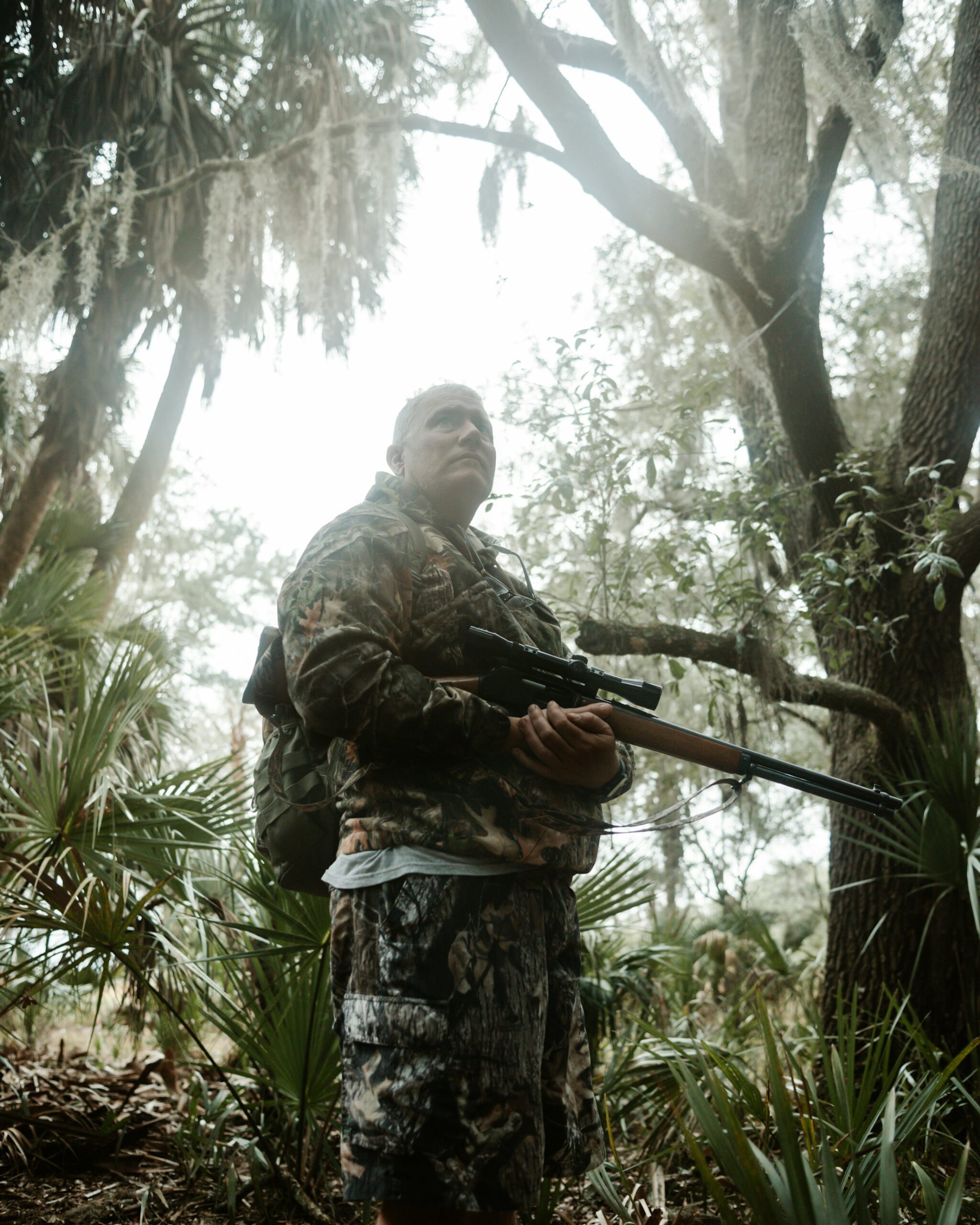
Never climb with a gun or bow in your hands or on your back. Tie a haul line to the stand, climb up, clip in, and then pull your gear up.
A firearm should be unloaded, with the action open and the muzzle pointed down, both going up and coming down. Use the same line for your bow and pack. Lower everything to the ground before you start down.
6. Keep three points of contact
When you climb, keep three points on the ladder or steps at all times. That means two hands and one foot, or two feet and one hand. Go slowly. Frost, ice, rain, and mud on your boot soles all make steps slick.
Take extra care moving from the ladder or steps onto the platform, and back again. That’s the most awkward move of the climb. Keep your hands free the whole way, and let the haul line carry everything else.
7. Tell someone your plan
Before you leave, tell someone where you’ll hunt and when you’ll be back. A map pin in a text works well. Ask them to call for help if they don’t hear from you by a set time. If you change spots during the day, send an update.
8. Keep your phone on your body
A phone in your pack on the ground, or hanging on a hook, won’t help you if you’re hanging from a harness. Keep it charged and in a pocket you can reach with either hand.
Some areas have weak or no cell signal. Know that before you go, and carry a whistle so searchers can find you.
9. Carry a suspension relief strap
If you fall and hang in your harness, the leg straps can cut off blood flow. This is called suspension trauma, and it can become life-threatening quickly.
A suspension relief strap is a loop that attaches to your harness. You step into it so you can stand up and take pressure off your legs. Many harnesses come with one. Practice reaching it and using it at home, close to the ground. If you fall and can’t get back to the stand or down safely, call for help right away.
10. Practice first and know your limits
Read your stand’s instructions, and watch any safety video that came with it. Practice hanging the stand and using your harness a few feet off the ground in daylight before the season.
Stay within the weight limit for your stand and harness, and count your gear in that total. Skip the stand when you’re very tired, sick, or taking medicine that makes you drowsy. High winds, ice, and lightning are good reasons to hunt from the ground or stay home.
Climbing stands need one more habit. Tie the top and bottom sections together with a short rope. Then the foot section can’t drop away if it slips off your boots.
For official guidance, see the Treestand Manufacturers Association’s safety materials and your state wildlife agency’s hunter education program. Many state hunter education courses cover tree stands in detail.
The habit that ties it all together is simple. Put your harness on and clip in before your feet leave the ground, every time.