How to Layer for a Cold Morning in the Tree Stand
Some links on this page are affiliate links. If you buy through them, we may earn a small commission at no extra cost to you. Learn more.
Sitting still in a tree stand on a cold morning is a special kind of cold. You aren’t moving, you’re up in the wind, and there’s nowhere to hide from it. This guide shows how to layer so you stay warm through a long sit without sweating on the walk in.
Start with the right base layer
Your base layer sits against your skin. Its job is to move sweat away so you stay dry.
- Pick wool or synthetic. Merino wool stays warm when damp and holds less odor. Synthetic dries faster and usually costs less. Both work.
- Skip cotton. It soaks up sweat, stays wet, and pulls heat from your body.
- Wear a top and bottom. Cold legs make the whole sit miserable.
- Go snug, not tight. It should touch your skin without squeezing.
Use a lighter base layer on mild mornings, and a midweight or heavier one when it’s truly cold.
Add a warm mid layer
The mid layer traps heat. Fleece, wool, or an insulated puffy jacket all work.
Synthetic insulation keeps working when it gets damp. Down is very warm for its weight, but it loses much of its warmth when wet. Two thinner mid layers give you more options than one thick one. You can add or drop one as the morning changes.
Bowhunters often like an insulated vest. It keeps your core warm and leaves your arms free to draw. Don’t forget your legs: insulated pants or bibs make a big difference.
Finish with a quiet outer layer
The outer layer blocks wind, and wind is what steals heat fastest up in a tree. Pick a quiet fabric, like brushed polyester or wool, that won’t rustle when you move or draw a bow. If rain or snow is likely, make sure it’s waterproof too.
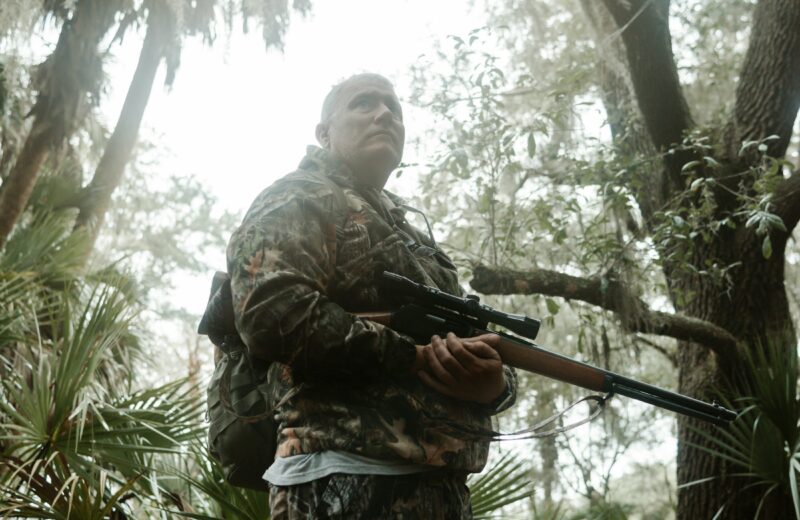
Make sure it fits over everything without squeezing. Packed-down insulation doesn’t keep you as warm. Bowhunters should draw their bow at home in the full outfit, to check that sleeves stay clear of the string.
If your state requires blaze orange during gun season, your outer layer or a vest over it needs to meet that rule. Check your state wildlife agency’s guide for details.
Walk in light so you don’t sweat
This step matters more than any piece of gear. Sweat soaks your base layer, and a wet base layer will chill you for the rest of the sit.
- At the truck, dress in your base layer and one light mid layer. You should feel a little cool when you start walking.
- Pack the heavy layers, like your insulated jacket, bibs, hat, and face mask.
- Walk slower than you want to. Unzip or pull off your hat if you start to feel warm.
- At the base of the tree, rest a few minutes and let your body cool down.
- Put on the rest of your layers, then put your harness on over the top. Clip in and climb.
The harness goes on over your final layer, unless your jacket is built with an opening for the tether. Never take your harness off up in the stand to add a layer. If you get too warm later, unzip instead.
Keep your feet, hands, and head warm
Feet
Cold feet end more sits than anything else. Wear insulated boots with enough room to wiggle your toes, because tight boots cut off blood flow and feel colder. Wear wool socks, and carry a dry pair to change into at the tree. A piece of foam or an old rug on a metal platform helps keep the cold from creeping up through your soles. Toe warmers help on the coldest days.
Hands
Thick gloves keep you warm but make it hard to shoot. A good fix is thin gloves plus a hand muff around your waist with a couple of hand warmers inside. Your hands stay warm and ready, and you pull them out when a deer shows up.
Head and neck
A warm hat and a neck gaiter make a big difference, because those spots are often left bare. A face mask or hood adds more warmth on windy days. Body warmers placed over your base layer, on your back or chest, help too. Follow the package directions and keep them off bare skin.
Pack your layers so they’re easy to reach
Pack in the order you’ll put things on at the tree. What goes on first should sit on top of the pack. That way you’re not digging in the dark or dumping gear on the ground.
- Use a pack big enough to hold your heavy layers without cramming.
- Stuff sacks keep bulky items small and quiet.
- Bring a bag for any layer you took off damp.
- Hang your pack on a hook within reach once you’re settled, so you can add or shed layers without big moves.
Pack a snack and some water too. Your body needs fuel to make heat, and a hot drink in a thermos feels great at sunrise.
Our rule is easy to remember. If you feel warm when you leave the truck, you’re wearing too much.